China Accused of Forcing Mandarin Education on Tibetan Preschoolers, Says Human Rights Watch
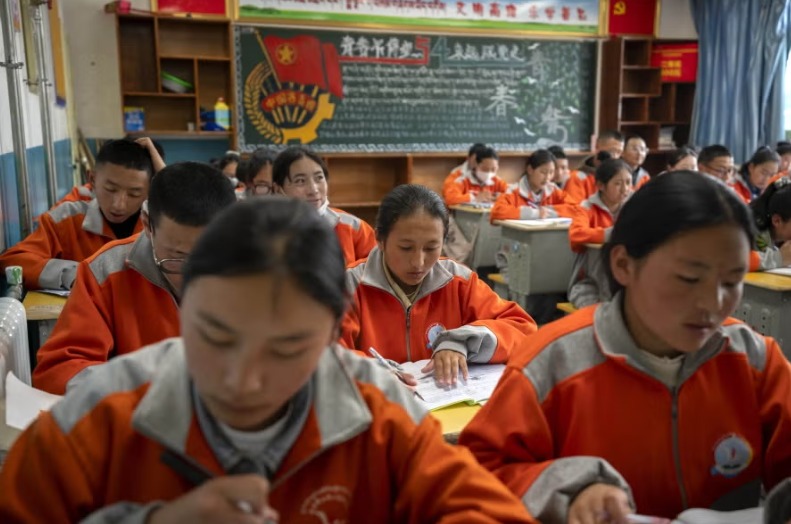
A new report by Human Rights Watch (HRW) has raised concerns over what it describes as China’s expanding efforts to assimilate Tibetan children through mandatory Mandarin-language education in preschools across Tibetan regions.
The report, titled “Start with the Youngest Children: China Uses Preschools to ‘Integrate’ Tibetans”, alleges that a policy introduced by China’s Ministry of Education requires standard Mandarin Chinese to become the primary language of instruction in kindergartens located in ethnic minority areas, including Tibet.
According to HRW, the policy — referred to as the “Children’s Speech Harmonisation Plan” — has significantly reduced the role of the Tibetan language in early childhood education. Rights advocates argue that the move is part of a broader campaign aimed at integrating Tibetans more closely into a unified Chinese national identity from an early age.
The report states that Tibetan children are now being educated almost entirely in Mandarin during their preschool years, a period considered critical for language development and cultural identity formation. Human Rights Watch claims that many Tibetan children are gradually losing fluency in their native language, raising concerns about cultural erosion and weakening ties between younger generations and traditional Tibetan society.
The organisation also alleges that ideological education has become increasingly common in Tibetan preschools, with lessons promoting loyalty to the Chinese Communist Party and Chinese national identity. In some reported cases, parents were allegedly encouraged to speak Mandarin at home and provide evidence of compliance to schools.
Human rights groups argue that these educational policies form part of a wider effort by Beijing to tighten political and cultural control in Tibet. Similar concerns have previously been raised regarding boarding schools, restrictions on Tibetan-language instruction, and limitations placed on religious and cultural practices in Tibetan areas.
Maya Wang, Deputy Asia Director at Human Rights Watch, said the policy is accelerating the loss of Tibetan language and identity among young children. The organisation called on Chinese authorities to allow Tibetan children to receive education in their native language and urged international governments to raise concerns over cultural and educational rights in Tibet.
China has consistently defended its policies in Tibet, arguing that Mandarin-language education improves economic opportunities, national integration, and access to modern education. Chinese officials maintain that policies in Tibetan regions are intended to promote development, social stability, and ethnic unity.
The issue has intensified international debate surrounding cultural rights, minority education, and identity preservation in Tibet. Rights organisations and Tibetan advocacy groups warn that continued restrictions on Tibetan-language education could have long-term consequences for the survival of Tibetan culture and linguistic heritage.