Chinese Authorities Step Up Surveillance and Control of Tibetans in Lhasa
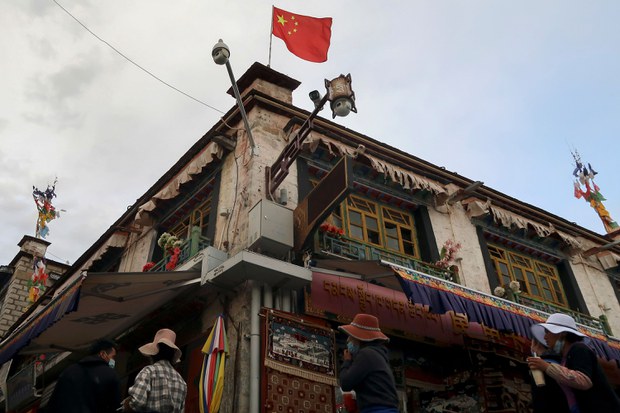
Lhasa, Tibet (August 17, 2024) — Chinese authorities have dramatically increased surveillance and security measures in Lhasa, drawing sharp criticism from residents and rights observers who say the moves reflect deeper efforts to tighten control over Tibetan society during a major cultural festival.
According to sources inside the region, the heightened security began in early August and coincided with the annual Shoton Festival, a significant religious and cultural event marked by the unveiling of a giant thangka painting and traditional performances. In response, authorities launched what they described as a “summer public security crackdown and rectification operation,” deploying significantly more police and inspection checkpoints throughout the city.
Officials increased the presence of plainclothes and uniformed officers on city streets and established numerous checkpoints where residents and vehicles were inspected. Law enforcement reportedly conducted thousands of venue and traffic inspections as part of efforts officials say are intended to protect stability and national unity.
In a controversial move, local authorities also recruited food delivery workers as auxiliary police, effectively expanding surveillance through civilian networks. Workers from a major delivery service were pressed into “voluntary patrol and prevention work,” assisting police by monitoring communities at night and reporting suspicious activity — a tactic seen by critics as blurring the line between civilian life and state security functions.
Authorities have simultaneously cracked down on social media use. Under new rules, Tibetan users were required to re-register social media accounts with personal identification linked to state databases — including phone and identity card verification — giving the government direct access to user information. Residents who failed to comply were reportedly summoned, and phones were examined by officials during inspections.
Security forces have also targeted tools that allow Tibetans to circumvent strict internet controls, such as virtual private networks (VPNs), which help users access content outside China’s online firewall. At least three people were temporarily detained for using VPNs to access restricted sites.
While Chinese authorities justify these measures as necessary for public safety and social order, critics argue the surveillance escalation reflects a broader strategy to curb political dissent and suppress expressions of Tibetan identity. Rights advisers say that parallels broader trends across the region, where digital controls, policing tactics, and restrictions on communication have become increasingly intrusive.
Tibetans inside the region face daily pressures from tightened internet monitoring and random inspections of phones and communications. Rights groups report that individuals can be summoned or detained for sharing information online or connecting with contacts outside China.
The uptick in security measures during a major cultural festival has further underscored concerns among observers that authorities are increasingly willing to limit personal freedoms under the banner of “stability maintenance,” particularly in times of heightened cultural activity.
As Chinese state security efforts expand, questions about the balance between public safety and respect for basic freedoms in Tibet remain at the forefront of international attention.