
Devastating Tibet Earthquake Highlights Resilience and Future Risks
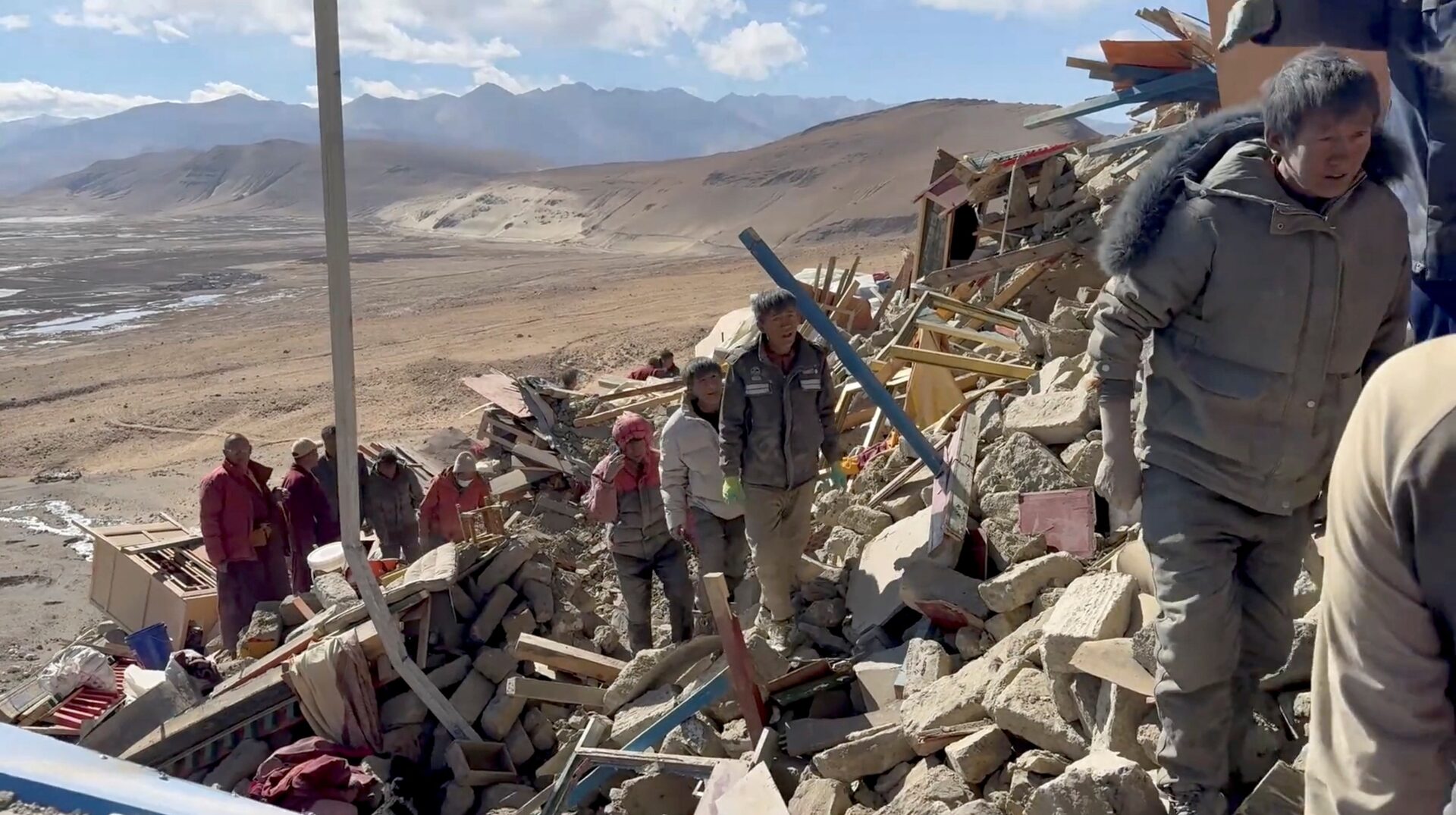
Tibet (January 24, 2025) — A powerful earthquake measuring around magnitude 7.1 struck western Tibet at the start of the year, causing significant destruction in remote, high-altitude communities already facing harsh winter conditions. Due to restricted access and limited independent reporting, the full extent of the damage remains unclear, with much of the available information coming from official sources.
In the immediate aftermath, local Tibetans mobilised quickly to support one another. Monks, community leaders, entrepreneurs, and volunteers coordinated grassroots relief efforts, delivering food, blankets, and emergency supplies to affected families. Traditional prayers and religious rituals were also conducted, offering spiritual comfort to those impacted. Community solidarity emerged as a defining feature of the response.
At the same time, reports indicate that access to the disaster zone was tightly controlled. Restrictions on movement and information limited the ability of independent groups and outside observers to assess conditions on the ground. Social media activity from the region was reportedly monitored, and unofficial accounts of the damage were constrained.
Official figures placed the death toll at over 100, though some observers suggest the number could be higher. Numerous aftershocks followed the main quake, underscoring the region’s vulnerability as it lies along major seismic fault lines.
The disaster has also drawn renewed attention to the risks associated with large-scale infrastructure development in Tibet, including dams and other major construction projects in earthquake-prone areas. Concerns have been raised about the structural safety of such projects and their potential impact on downstream populations who rely on rivers originating on the Tibetan plateau.
As reconstruction begins, some analysts warn that rebuilding efforts may accelerate state-led development initiatives, potentially reshaping local communities and landscapes. Others emphasise the need for greater transparency and community involvement in recovery planning.
While the earthquake exposed the fragility of life in this seismically active region, it also revealed the strength and resilience of Tibetan communities. In the face of uncertainty and hardship, local solidarity and mutual support remain powerful forces shaping the path toward recovery.